A Real FTC Agent Won't Text You Their Photo ID: The "We'll Get Your Money Back" Scam
- 2 mins
Losing money to a scam is upsetting. So when someone reaches out and says they can get it back for you, it feels like good news. That is exactly what a new scam is counting on.
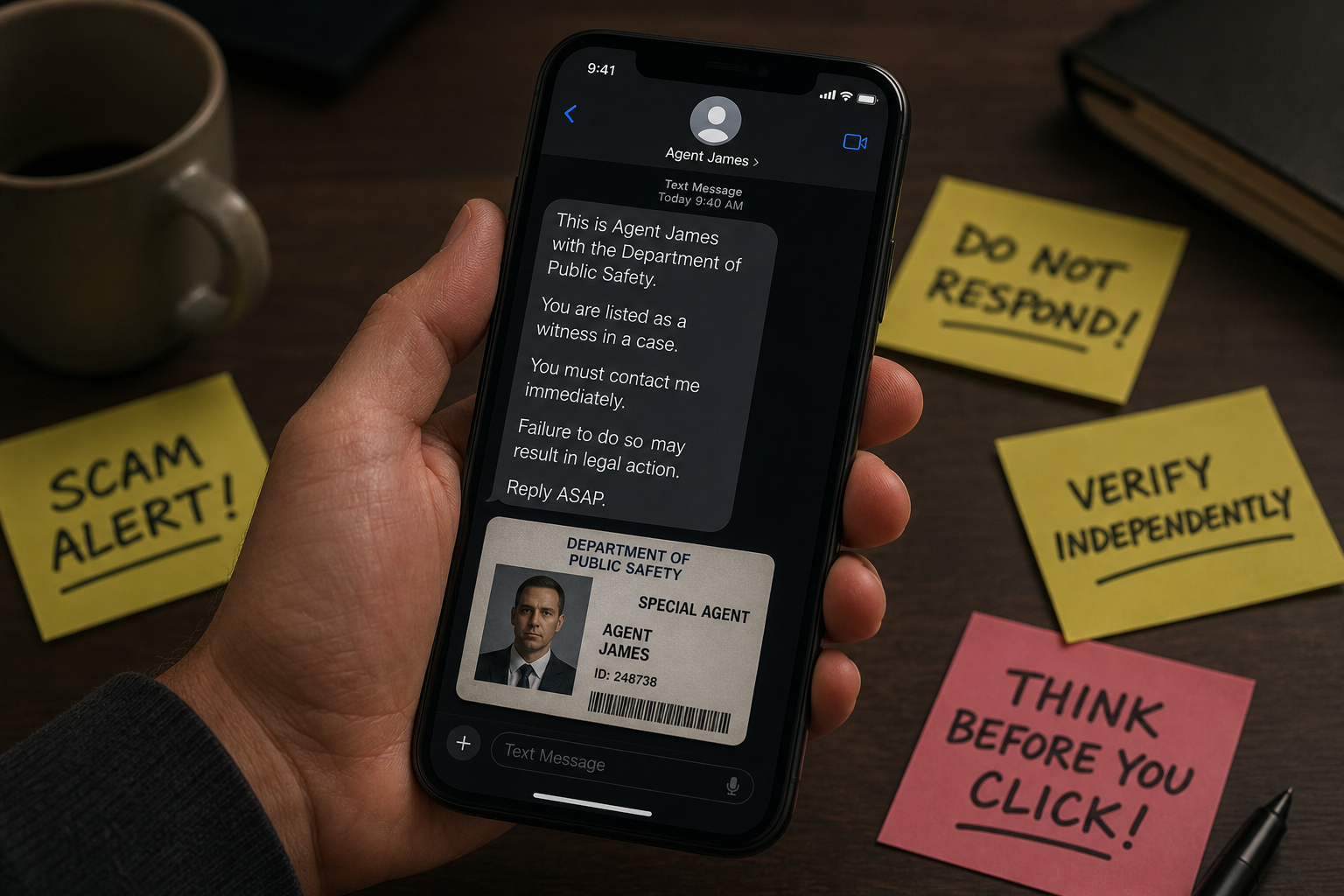
The Federal Trade Commission (FTC) recently warned about scammers who pretend to be FTC employees. They contact people by text or through apps like WhatsApp. They claim they can help you recover money you lost in an earlier scam. To seem real, they even send a photo of an official-looking ID badge.
It looks convincing. But it is a trap.
What This Scam Looks Like
The scammer sends a text or message out of the blue. They say they work for the FTC or are a government "agent." They tell you they can recover the money you lost.
Then they build trust. They may use the name of a real FTC employee. They send a photo of an ID card or badge that looks official. Some even mention details about a scam you really did fall for, which makes it feel personal and true.
Once you trust them, they ask for something. They may want you to pay a fee first. They may ask you to move your money to a "safe" account they name. Or they may ask for your bank or card details. Every one of these requests is a red flag.
A Real Example
Imagine you lost $500 to a fake tech-support call last year. A few months later, you get a text: "This is Agent Miller with the FTC. We recovered funds from a fraud case and can return your $500. To release it, we need a small processing fee."
The text includes a photo of a government ID with a real-looking seal. It feels legitimate. But no real FTC employee works this way. If you pay that "fee," the money is gone, and so are you off to the next request.
How To Stay Safe
Follow these simple steps if someone claims to be from the FTC or another government agency.
- Stop and don't reply. A real FTC employee will not text you or message you on WhatsApp out of the blue.
- Ignore the photo ID. A real agent will never text you a photo of their badge to prove who they are. Anyone can fake a photo.
- Never pay to get money back. The government will not ask you to pay a fee, buy gift cards, or move money to "recover" your funds. That is always a scam.
- Guard your details. Do not share your bank account, card numbers, or Social Security number with anyone who contacts you first.
- Take your time. Scammers push you to act fast. Real help is never in a rush. Hang up or set the phone down and talk to someone you trust.
- Report it. You can report these messages to the FTC at ReportFraud.ftc.gov. Reporting helps protect others too.
Remember: The Money-Back Promise Is the Trick
Here is the simplest rule to hold onto. If someone contacts you first and promises to recover money you lost, treat it as a scam. Real agencies do not chase people down by text with a badge photo and a fee.
If a message like this lands on your phone and you are not sure what to do, you do not have to figure it out alone. At Confidentive, we sit down with you, look at the message together, and help you decide the safe next step, with patience and no judgment. Reach out anytime for hands-on help.
And if this article was useful, please share it with a friend or family member. One quick conversation today could save someone you love a lot of money and worry tomorrow.

Rajat Aggarwal
I'm based in Seattle and have spent over a decade in the software industry. Recently, I've discovered my true passion: teaching and maximizing the impact of the resources I have to create meaningful outcomes. When I’m not sharing knowledge, you’ll likely find me diving into random science books from the library, letting my curiosity whisk me away into fascinating new worlds. I’d love to connect—feel free to reach out on Facebook or LinkedIn! Let’s inspire and grow together.